
Scholars
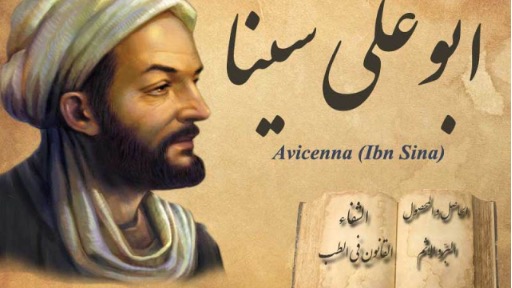
IBN SINA (AVICENNA)
Best known for his work “The Canon Medicine”
Ibn Sina most commonly known in English by his Latinized name Avicenna (propably because Avicenna sounds more western than Ibn Sina) (Greek: Abitzianos), (c. 980 – 1037) was a Persian polymath and the foremost physician and philosopher of his time. He was also an astronomer, chemist, geologist, Hafiz, Islamic psychologist, Islamic scholar, Islamic theologian, logician, paleontologist, mathematician, Maktab teacher, physicist, poet, and scientist.
- Born: August 980 AD, Afshona, Uzbekistan
- Died: 22 June 1037, Tomb of Avicenna, Hamedan, Iran
- Spouse: Yasamin
- Nickname: Ibn Sīnā
- Parents: Abdullah, Setareh
- Place of burial: Hamedan, Iran
Abu Bakr Al- Razi (Rhazes)
Abu-Bakr Muhammad Ibn-Zakariya Al Razi was born in the year 250 A.H (864 A.D) in the city of Rayy, six kilometers south east of Tehran. From an early age, he loved the study of science and scholarly discipline. In Rayy he studied law, medicine, and philosophy, but this did not satisfy his craving for knowledge. Although the city was full of scientists and scholars, it was not a city that embraced all the earth sciences at that time.
Therefore, Al Razi headed to the world’s center of knowledge, Baghdad, capital of the Abbasids Caliphate. He studied in an intensive exchange program and studied different sciences with a special focus on medicine. The first professor in that field was Ali Ibn-Zain at-Tabariyy, author of the first international medical encyclopedia named “Ferdaus al-Hikma” or the Paradise of Wisdom.
He wrote more than 224 books on various subjects. His most important work is the medical encyclopedia known as Al-Hawi fi al-Tibb, known in Europe as Liber Continens. His books in medicine, philosophy and alchemy had greatly effected the human civilization, especially in Europe.1 Some authors considered him the greatest Arabic-Islamic physician and one of the most famous known to humanity.2
- Born: 854 AD, Shahr-e-Rey, Iran
- Died: Shahr-e-Rey, Iran
- Full name: Abu Bakr Mohammad Ibn Zakariya al-Razi
- Nationality: Iranian
- Parents: Yahya ibn Zakariya al-Razi
- Philosophical era: Middle Ages
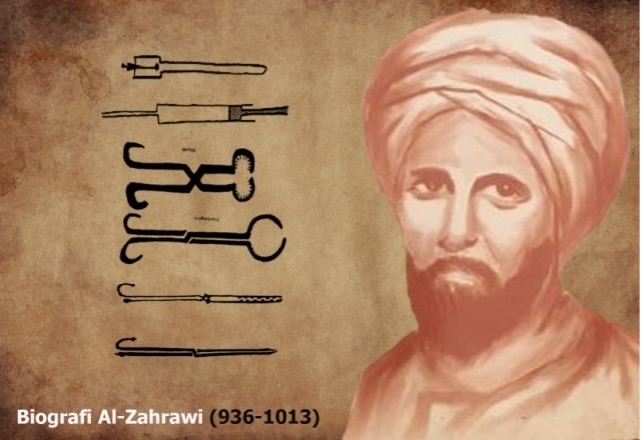
ABU AL QASIM AL ZAHRAWI
(ALBUCASIS)
Abū al-Qāsim Khalaf ibn al-‘Abbās al-Zahrāwī al-Ansari, popularly known as Al-Zahrawi, Latinised as Albucasis, was an Arab Andalusian physician, surgeon and chemist. Considered to be the greatest surgeon of the Middle Ages, he has been referred to as the “father of modern surgery”.
- Born: 936 AD, Medina Azahara - Conjunto Arqueológico Madinat al-Zahra, Spain
- Died: 1013, Córdoba, Spain
- Full name: Abū al-Qāsim Khalaf ibn al-‘Abbās al-Zahrāwī al-Ansari
- Nationality: Spanish
- Era: The Islamic Golden Age
- Influenced: Abu Muhammad bin Hazm, Guy de Chauliac, Jacques Daléchamps
Al-Hasan Ibn Al- Haytham
Born around a thousand years ago in present day Iraq, Al-Hasan Ibn al-Haytham (known in the West by the Latinised form of his first name, initially “Alhacen” and later “Alhazen”) was a pioneering scientific thinker who made important contributions to the understanding of vision, optics and light. His methodology of investigation, in particular using experiment to verify theory, shows certain similarities to what later became known as the modern scientific method. Through his Book of Optics (Kitab al-Manazir) and its Latin translation (De Aspectibus), his ideas influenced European scholars including those of the European Renaissance. Today, many consider him a pivotal figure in the history of optics and the “Father of modern Optics”.
Ibn al-Haytham was born during a creative period known as the golden age of Muslim civilisation that saw many fascinating advances in science, technology and medicine. In an area that spread from Spain to China, inspirational men and women, of different faiths and cultures, built upon knowledge of ancient civilisations, making discoveries that had a huge and often underappreciated impact on our world.
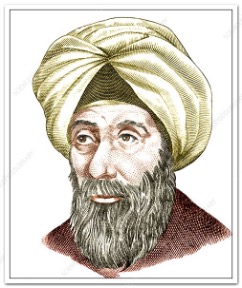
- Born: 1 July 965 AD, Basrah, Iraq
- Died: 6 March 1040, Cairo, Egypt
- Influenced by: Euclid, Thābit ibn Qurra, Ibn Sahl
- Influenced: Johannes Kepler, René Descartes, Qutb al-Din al-Shirazi
- Full name: Abū ʿAlī al-Ḥasan ibn al-Ḥasan ibn al-Haytham
- Fields: Physics, mathematics, astronomy
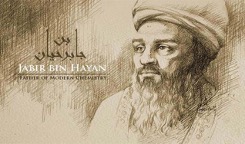
- Born: 721 AD, Tous, Iran
- Died: 815 AD, Kufa, Iraq
- Full name: Abu Mūsā Jābir ibn Hayyān
- Nicknames: Father of Early Chemistry, Geber, al-Azdi, al-Bariqi, al-Kufi, al-Sufi, al-Tusi
- Nationality: Umayyad
- Place of burial: Kufa, Iraq
IBN MUSA JABIR IBN HAYYAN
Abu Musa Jabir Ibn Hayyan Al-Azdi, sometimes called al-Harrani and al-Sufi, is considered the father of Arab chemistry and one of the founders of modern pharmacy. He was known to the Europeans as Geber. He was born in the city of Tus in the province of Khorasan in Iran in 721 AD. His father Hayyan Al-Azdi was an “Attar” (druggist or pharmacist) from the Arabian Azd tribe in Yemen, who resided in the city of Kufa in Iraq during the rule of the Umayyads. Hayyan supported the Abbasid revolt against the Umayyads and moved to Iran where Jaber was born. The family fled to Yemen after Hayyan was caught and executed by the Umayyads. Jabir studied in Yemen under the tutelage of the scholar Harbi Al-Himyari. He returned back to Kufa after the Abbasids dynasty took over. It is claimed that he became a student of Imam Jafar Al-Sadiq. He learned chemistry (alchemy), pharmacy, philosophy, astronomy, and medicine. He became the court alchemist during the reign of Caliph Haroun Al-Rashid and was a physician working for his grand ministers (vizir), the Barmakids. He died at the old age of 94 in 815 AD in Kufa.
It is claimed by some authors1,2 that he was a prolific writer authoring 300 books on philosophy, 1300 books on mechanical devises and hundreds of books on alchemy. This very large body of Arabic writings, many of them highly tantalizing, pass under the name of Jabir Ibn Hayyan. This “corpus Jabirianum” with over 500 titles was suspected by other authors3 as not having been written by Jabir himself, but were instead additions by his students or followers and considered products of the Jabir school in alchemy. Others (Lory) thought some of these books were written by Jabir, while others were written at a later time over a period of two centuries.
IBN AL- BAITAR
Ibn al-Baitar was born in the city of Málaga in al-Andalus (Muslim Spain) at the end of the twelfth century, hence his nisba “al-Mālaqī”.[2] His name “Ibn al-Baitar” is Arabic for “son of the veterinarian”, which was his father’s profession.[4][5] Ibn al-Bayṭār learned botany from the Málagan botanist Abū al-ʿAbbās al-Nabātī with whom he started collecting plants in and around Spain.[6] Al-Nabātī was responsible for developing an early scientific method, introducing empirical and experimental techniques in the testing, description and identification of numerous materia medica, and separating unverified reports from those supported by actual tests and observations. Such an approach was thus adopted by Ibn al-Bayṭār.[7]
In 1219, Ibn al-Bayṭār left Málaga, travelling to the coast of North Africa and as far as Anatolia, to collect plants. The major stations he visited include Marrakech, Bugia, Constantinople, Tunis, Tripoli, Barqa and Antalya.[citation needed]
After 1224, he entered the service of the Ayyubid Sultan al-Kāmil and was appointed chief herbalist. In 1227 al-Kāmil extended his domination to Damascus, and Ibn al-Bayṭār accompanied him there, which provided him an opportunity to collect plants in Syria. His botanical researches extended over a vast area including Arabia and Palestine. He died in Damascus in 1248.[2]
- Born: 1197, Málaga, Andalusia , Almohad caliphate, Now Province of Malaga, Spain
- Died: 1248, Damascus, Syria
- Known for : Scientific classification Oncology
- Fields: Botanist, Scientist, Pharmacist, Physician
- Books: Kitāb al-Jāmiʻ li-mufradāt al-adwiya wa-l-aghdhiya
- Nationality: Spanish
- Influenced by: Ibn Sina, Abu Bakr al-Razi, Galen, MORE


